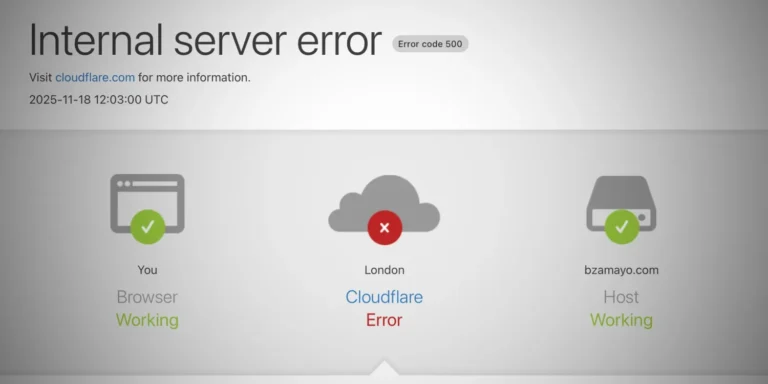
OpenAI has confirmed a Mixpanel security incident that exposed certain customer details, including names, emails, and usage metadata of some ChatGPT and OpenAI API users.
This was not a breach of OpenAI’s own servers — but rather a third-party analytics platform (Mixpanel) that OpenAI previously used for telemetry.
This article breaks down exactly what happened, the truth behind the word “hacked,” what data was exposed, and what this incident means for OpenAI users going forward.

Published Date:
Modify Date:
Disclosure: Technopedia.org.in is reader-supported. We may earn a small commission when you purchase through our affiliate links (Amazon) at no extra cost to you. Prices are accurate as of November 2025.

What Exactly Happened? The Incident Explained in Simple Terms
In November 2025, OpenAI disclosed that a third-party analytics provider (Mixpanel) suffered a security incident that unintentionally exposed:
- Customer email addresses
- User IDs
- Subscription-related metadata
- Certain internal usage analytics
This exposure was not caused by OpenAI systems being breached.
Instead, Mixpanel — a tool used by many major tech companies for event tracking — experienced unauthorized access.
OpenAI clarified that:
- No API keys were exposed
- No chat messages or conversation history leaked
- No payment information was accessed
- No model access credentials leaked
This was a metadata-level exposure, not a content-level breach.
This distinction is extremely important for users and regulators.
Table of Contents
How Mixpanel Was Involved: Why the Incident Happened
Mixpanel is an analytics platform used by thousands of companies, including Fortune 500 brands. OpenAI historically used it to track usage metrics such as:
- New sign-ups
- API usage spikes
- Feature interactions
- User retention analytics
According to OpenAI’s disclosure, a set of tracking events stored within Mixpanel contained user identifiers, which became accessible due to a security gap within Mixpanel’s internal systems.
The incident was discovered quickly, and Mixpanel revoked the compromised credentials.
OpenAI then immediately:
- Disabled Mixpanel integrations
- Notified affected users
- Updated its transparency report
- Released official guidance
What Data Was Exposed (Confirmed by OpenAI)
Here is the verified list of exposed data types:
✔ Email addresses
Used for OpenAI login and API communications.
✔ Internal user IDs
Identifiers used inside analytics dashboards.
✔ Subscription tier information
Whether users were on Free, Plus, Team, or API plan.
✔ Usage analytics metadata
Event logs like “logged in”, “opened workspace”, “created API key” (but NOT the keys themselves).
Nothing beyond this has been confirmed.
Also Read: OpenAI Debuts ChatGPT Shopping Research Tool (2025): Deep Analysis, Insider Breakdown & The Future of AI-Powered Buying Decisions



What Data Was NOT Exposed (Most Important Section)
OpenAI explicitly confirmed that none of the following were leaked:
✘ API keys
These remain encrypted and stored separately.
✘ ChatGPT conversation content
No prompts, answers, attachments, or files leaked.
✘ Model usage logs
No fine-tuning datasets or model files exposed.
✘ Payment details
No credit card numbers, invoices, or billing histories leaked.
✘ Authentication credentials
No passwords, OAuth tokens, or login cookies leaked.
This is why experts classify this as a data exposure case, not a platform breach.
Why This Happened: Technical Breakdown Without the Jargon
To understand how this incident surfaced, here’s the simplified version:
- OpenAI sent certain anonymized usage events to Mixpanel.
- Some of these included identifiers like email or user ID → not ideal.
- Mixpanel suffered a cyber attack targeting customer analytics data.
- The logs containing OpenAI-related metadata were accessed.
- Mixpanel notified OpenAI as part of its security obligations.
- OpenAI publicly disclosed the incident.
This was not an attack on ChatGPT itself.
It was an attack on a data analytics partner, similar to what many tech companies have faced before.
Who Is Affected? (The Practical Impact)
This incident affects:
- A subset of ChatGPT users
- A subset of OpenAI API developers
- Users who interacted with OpenAI products during the period Mixpanel was integrated
OpenAI has sent emails to individuals whose data may have been included in the logs.
If you did NOT receive an email from OpenAI, it likely means:
- Your data wasn’t in the affected Mixpanel logs
- Or your OpenAI usage didn’t include the analytics events that were exposed
Also Read: Apple’s Foldable iPhone Breakthrough Is Finally Real — And the Crease-Free Display Changes Everything
Does This Incident Affect Indians Using ChatGPT?
Yes, potentially — but with minimal risk.
Because email addresses and user IDs were included, some Indian users who:
- Signed up with ChatGPT
- Used OpenAI API
- We were active during Mixpanel analytics integration
… may appear in the exposed dataset.
However:
- No payment details
- No India KYC-sensitive data
- No Aadhaar or PAN
- No queries or prompts
… were included.
The exposure is inconvenient, not dangerous.
OpenAI’s Response: Fast, Transparent, and Highly Structured
OpenAI reacted unusually fast for an incident of this nature:
1. Public disclosure within hours
This aligns with global regulatory standards.
2. Affected users notified
OpenAI sent direct emails to impacted accounts.
3. Mixpanel integration removed
All analytics pipelines involving Mixpanel were shut down.
4. Data practices updated
OpenAI reaffirmed its policy of minimal third-party telemetry.
5. Transparency report updated
This is a new requirement under global AI safety frameworks.
This is not typical Big Tech behavior — OpenAI acted more quickly and transparently than many companies historically have.
Looking for great earbuds under ₹2,000?
Here are the top picks buyers are choosing this month — popular for their sound quality, call clarity, and value for money. These models consistently perform well and remain the most trusted options in this budget.


Should You Change Your Password or API Key?
✔ No — passwords were not exposed
Still, it’s smart security hygiene to update periodically.
✔ No — API keys were not exposed
But consider rotating them for peace of mind.
✔ No — credit card data was not involved
The only recommended action is:
Stay aware if you receive unsolicited emails that appear to come from OpenAI.
Phishing attempts may increase after any exposure event.
Industry Experts Weigh In
Cybersecurity analysts from TechCrunch, The Indian Express, and Moneycontrol note that:
- This is a data exposure, not a hack of ChatGPT
- The impact is low to moderate, not catastrophic
- OpenAI’s infrastructure was not breached
- Transparency was handled professionally
- Users do not need to panic or disable accounts
This aligns with global data-handling best practices.
Also Read: Nano Banana Pro Review 2025: Google’s New AI Image Model Is Changing Everything for Indian Creators
What Happens Next (OpenAI’s Roadmap After the Incident)
OpenAI has now committed to:
✔ Removing third-party analytics where possible
This trend aligns with the company’s shift toward internal telemetry.
✔ Hardening vendor access
Stricter policies on third-party data retention.
✔ Conducting a full audit of external services
Especially vendors that handle identifiers.
✔ Publishing updated data-handling guidelines
Focused on privacy, encryption, and zero-knowledge retention.
This incident may actually strengthen the company’s overall security framework.
Did OpenAI itself get hacked?
No — Mixpanel (a third-party analytics platform) had the exposure.
Were ChatGPT messages leaked?
No. No conversations, files, attachments, or prompts were exposed.
Were API keys leaked?
No. API keys remain secure.
Was payment information leaked?
No. Billing data was never part of Mixpanel analytics.
Should I delete my OpenAI account?
No — the risk level doesn’t warrant such steps.
Will this affect ChatGPT’s performance or safety?
Not at all. The incident does not impact model reliability or service quality.
Did OpenAI try to hide the incident?
No — they disclosed it quickly and voluntarily.
Final Verdict: A Data Exposure Incident, Not a ChatGPT Hack
The OpenAI Mixpanel incident is a metadata exposure, not a platform breach.
It does not compromise ChatGPT content, OpenAI’s models, payment data, or API keys.
While user identifiers were accessed, the overall risk remains limited.
OpenAI’s response was fast, transparent, and aligned with global security standards — which signals maturity in how the company handles data governance at scale.
Users should remain aware — but not alarmed.
Loved this guide? Explore more in Cybersecurity, AI Trends, Buying Guides, and Tech Review — your next tech discovery starts here. Don’t miss any Trending Tech News.