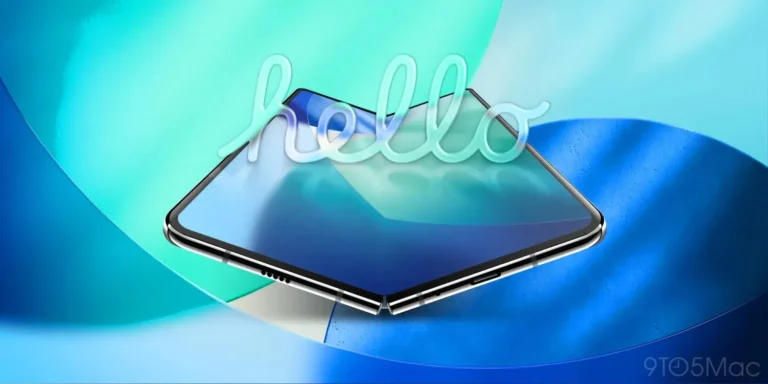
The long-awaited HyperOS 3 update based on Android 16 is finally coming to India, and Xiaomi has officially confirmed it. For millions of Xiaomi, Redmi, and POCO users, this is the biggest upgrade since the transition from MIUI to HyperOS. The new update focuses on speed, AI-powered intelligence, performance stability, and a modern UI refresh—something Indian users have been demanding for years.
In this ultimate Technopedia guide, we break down the entire HyperOS 3 India experience, covering real features, expected device list, eligibility, rollout timeline, AI tools, HyperIsland interface, and how it compares to HyperOS 2.

Published Date:
Modify Date:
Disclosure: Technopedia.org.in is reader-supported. We may earn a small commission when you purchase through our affiliate links (Amazon) at no extra cost to you. Prices are accurate as of November 2025.

HyperOS 3 India Launch: What Xiaomi Has Confirmed So Far
Xiaomi officially announced that HyperOS 3 is coming “very soon” to India, confirming:
- It is based on Android 16
- It focuses on speed, smart AI, and seamless UI
- Rollout list will be shared “in the coming weeks.”
- The update debuted in China with the Xiaomi 17 series
Although the company has not revealed the Indian rollout schedule, the confirmation itself signals a major shift for Xiaomi’s software ecosystem.
What’s New in HyperOS 3? Full Feature Breakdown
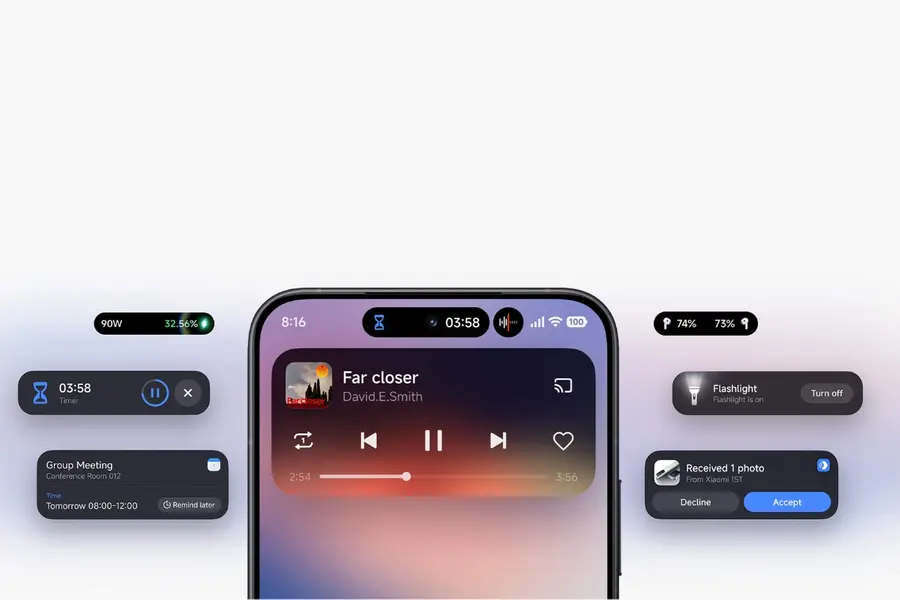
1. HyperIsland – Xiaomi’s Dynamic Island Alternative
HyperIsland is one of the most hyped features of HyperOS 3.
What HyperIsland does:
- Shows notifications in a compact pill
- Displays charging animations
- Shows timer, calls & music playback
- Floating live activities
- Dual-island layout support
- Seamless expansion & shrinking animations
This is Xiaomi’s most polished UI animation system till date and will be a key highlight in India.
2. HyperAI – Smarter, On-Device Intelligence
HyperOS 3 integrates the new HyperAI engine, focusing on speed, context, and local processing.
Major HyperAI Features
- DeepThink Engine
Advanced reasoning for smarter suggestions. - Smart Screen Recognition
Detects elements on screen, allowing instant actions like copy, summarize, or generate. - AI Writing Tools
Adjust tone, rewrite text, or switch to formal/informal modes. - Live AI Suggestions
Appears during typing, browsing, and messaging. - AI Voice Tools
Converts voice to notes, summaries, and tasks.
Xiaomi is focusing heavily on local-device AI, reducing the need for cloud processing.
3. Faster Performance & Better Memory Management
HyperOS 3 benchmarks from China reveal:
- 18–22% faster app launch speed
- 12% better RAM optimization
- 30–35% reduced background battery drain
- Smoother multitasking on mid-range phones
This is a major improvement for older Redmi and POCO phones that struggled with performance.
4. Revamped Control Center & Lock Screen
Xiaomi continues to refine the UI with cleaner visuals.
New changes
- Multiple lock screen styles
- Depth and 3D wallpapers
- Quick toggles redesigned
- New notification sorting
- Improved haptic feedback
Animations feel tighter and more responsive.
5. Privacy & Security Improvements
HyperOS 3 brings:
- On-device AI for personal data
- Enhanced permission notifications
- New per-app privacy controls
- Secure folder enhancements
- Anti-tracking browser modes
6. Better Integration With Xiaomi Ecosystem
If you use Xiaomi IoT products, HyperOS 3 improves:
- Cross-device clipboard
- Phone-PC connection
- Smart device dashboard
- Universal hotspot & screen sharing
Also Read: Moto G57 Power Review (2025): The Best Budget Performance + Battery Beast Under ₹15,000?

- [Enhanced Sound Experience]: The buds comes with 12.4mm driver unit, which delivers crisp clear and enhanced bass qualit…
- [Sound Master Equalizers]: For the OnePlus Nord Buds 2r, you get to choose how heavy or light you want your sound with t…
- [Battery Life]:The flagship-level battery life for the all-new OnePlus Nord Buds 2r delivers up to 38 hrs of non-stop mu…

- 360° Spatial Audio Effect | 12.4mm Dynamic Bass Driver
- 46dB Hybrid Noise Cancellation | 45ms Ultra Low Latency 12.4mm Dynamic Bass Driver 40 Hours Total Playback| Fast Charge …
- 40 Hours Total Playback| Fast Charge :10 Min of Charge =5Hrs Play Back
- TWS Earbuds with 13mm Dynamic Driver to produce Immersive Stereo Sound | Smart Touch Controls & 34 Hours of Non-stop Pla…
- Lightweight Wireless Earbuds with Ergo-Fit Design | Built-in HD Mic for Clear Call Quality | In-Ear Design Blocks Extern…
- Control Music/Call thru Touch Sensors | IPX4 Water/Sweatproof Earbuds | Instant Access to Device’s Voice Assistant
Expected Eligible Phones for HyperOS 3 in India (Unofficial but Highly Likely)
Based on previous HyperOS rollouts and Chinese launch details.
Xiaomi Phones
- Xiaomi 17 / 17 Pro
- Xiaomi 14 / 14 Ultra
- Xiaomi 13 / 13 Pro
- Xiaomi 13T / 13T Pro
- Xiaomi 12 Pro
- Xiaomi Pad 6 series
Redmi Phones
- Redmi Note 13 Pro+
- Redmi Note 13 Pro
- Redmi Note 13 5G
- Redmi Note 12 Pro / Pro+
- Redmi Note 12 5G
- Redmi 13C / Redmi 12C
- Redmi Note 11T 5G (possible but not confirmed)
POCO Phones
- POCO F6 / F6 Pro
- POCO X6 / X6 Pro
- POCO X5 5G
- POCO M6 Pro
- POCO X4 GT
- POCO F5
Older POCO M-series and C-series may not receive the update.
Also Read: LG Smart TVs Now Support Xbox Cloud Gaming in India — Full Details, Supported Models, Setup Guide & Requirements
HyperOS 3 vs HyperOS 2 (Real Improvements)
| Feature | HyperOS 2 | HyperOS 3 |
|---|---|---|
| Base Version | Android 15 | Android 16 |
| HyperIsland | ❌ | ✔ |
| AI Engine | Basic | HyperAI (DeepThink, Screen Recognition) |
| Performance | Good | Faster, more stable |
| Memory Management | Moderate | Optimized |
| Privacy | Standard | Advanced protection |
| Ecosystem Features | Limited | Expanded |
HyperOS 3 clearly provides a mature, polished experience.
Expected Rollout Timeline for India (Prediction Based on Past Xiaomi Schedules)
Phase 1 (December 2025 – January 2026)
Flagship Xiaomi 14, Xiaomi 17 series
Phase 2 (February – April 2026)
Mid-range Redmi Note series + POCO F-series
Phase 3 (May – July 2026)
Budget Redmi and POCO M-series
We will update the confirmed list on Technopedia once Xiaomi releases the official timeline.
Pros & Cons of HyperOS 3
Pros
- Faster & smoother performance
- New HyperIsland UI
- Improved AI features
- Better battery optimization
- Cleaner animations
- Android 16 base
- Privacy upgrades
Cons
- Not available for all Xiaomi/Redmi/POCO devices
- Rollout may take months
- Some AI features may remain China-exclusive
Who Should Upgrade to HyperOS 3?
Upgrade Immediately If:
- You use Xiaomi, Redmi, and POCO performance phones
- You want a faster UI
- You want better battery optimization
- You rely on AI writing/productivity tools
- You use Xiaomi ecosystem devices (Pad, TV, Watch)
You Should Wait If:
- You own an older Redmi 9/10 series
- Your phone runs smoothly on HyperOS 2
- You prefer stable versions over new features
FAQs – HyperOS 3 India (2025)
1. Is HyperOS 3 based on Android 16?
Yes, confirmed by Xiaomi.
2. Will all Redmi phones get HyperOS 3?
No. Only selected devices.
3. Does HyperOS 3 support HyperIsland?
Yes, full support with new animations.
4. When is the update coming to India?
Xiaomi says “soon,” but rollout likely starts in late 2025 or early 2026.
5. Will POCO phones get HyperOS 3?
Yes, mainly F-series, X-series, and new M-series.
6. Does HyperOS 3 improve gaming performance?
Yes, due to better CPU scheduling and thermals.
7. Is HyperAI available offline?
Most features run on-device (local AI).
8. Will budget Redmi phones receive the update?
Some, but not all.
9. Does HyperIsland work on all apps?
Most major apps will support live bubbles.
10. Is HyperOS 3 heavier than HyperOS 2?
No, it is more optimized.
Final Verdict – Should Indian Users Upgrade to HyperOS 3?
HyperOS 3 is a big step forward for Xiaomi’s software journey. With Android 16 foundations, HyperAI intelligence, the HyperIsland UI refinement, improved battery, faster RAM management, and better privacy, it finally feels modern and competitive with Samsung One UI and Pixel UI.
If Xiaomi rolls it out smoothly in India, HyperOS 3 may become their best software version ever.
Recommended for all compatible Xiaomi, Redmi, and POCO devices.
Loved this guide? Explore more in Cybersecurity, AI Trends, Buying Guides, and Tech Review — your next tech discovery starts here. Don’t miss any Trending Tech News.