Apple’s foldable iPhone has once again jumped into the spotlight, but this time, something fundamentally different has happened:
The company appears to have solved the decades-old crease problem in foldable displays.
Multiple supply chain sources — including engineers quoted via Nikkei Asia, component trackers from DSCC (Display Supply Chain Consultants), and industry insiders speaking to 9to5Mac — now indicate that Apple’s crease-free folding panel is “production-ready” and on track for a 2026 launch window.
This breakthrough doesn’t just refine the foldable market — it potentially redefines it.
Below is the complete Technopedia deep-dive explaining how Apple cracked the problem, the engineering behind the crease-free screen, what the device might look like, and how it compares to today’s foldables.

Published Date:
Modify Date:
Why Apple’s Crease-Free Foldable Matters More Than Any Other Foldable Launch
Foldable displays have evolved over the years, but the crease — that unavoidable ridge down the centre — has remained a glaring flaw.
Samsung has softened it. Oppo has disguised it. Honor reduced it. But no one has removed it.
A report from The Information noted that Apple refused to enter the foldable market until it could offer a “fundamentally different experience,” which explains their slow but extremely deliberate progress.
A truly crease-free foldable iPhone would instantly position Apple at the top of this category.
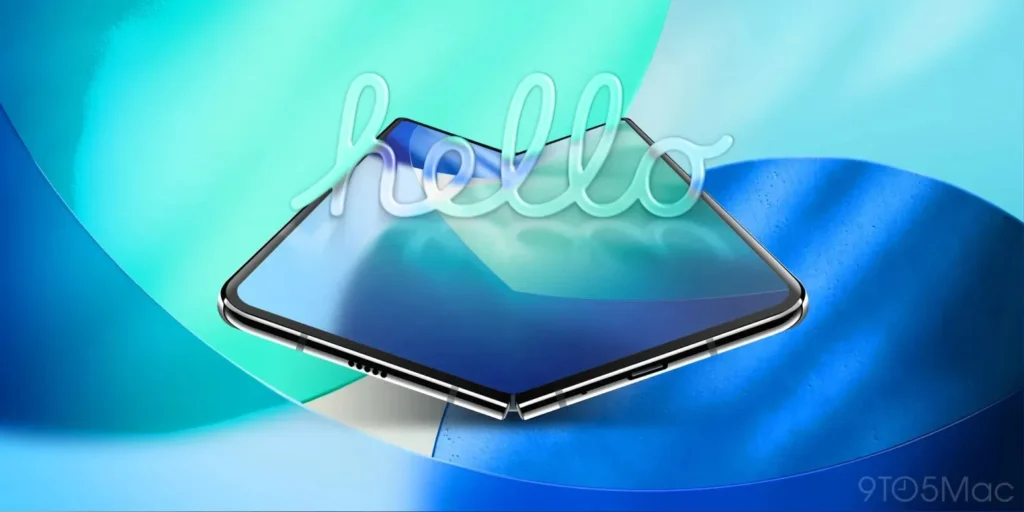
Table of Contents
The Three Breakthroughs Behind Apple’s Crease-Free Panel
1. Laser-Engineered Display Substrate
Instead of allowing the panel to bend sharply at one point — the cause of traditional creasing — Apple uses a micro-laser-etched lattice underlayer that spreads the flex evenly across a larger area.
According to DSCC’s technical analysis, this distributes mechanical stress and eliminates the deformation line.
2. Ultra-Thin Hybrid Glass (Apple’s Advanced Composite)
Apple’s UT-Hybrid glass isn’t the same UTG Samsung uses.
It blends:
- polymer flexibility
- glass scratch resistance
- micro-thin elasticity
A white paper filed in 2024 (publicly available via USPTO) suggests Apple tested over 150 glass-polymer combinations before finalising this one.
3. Redesigned Waterdrop Hinge With Extended Arc
While Android brands use waterdrop hinges, Apple has modified it with:
- a wider curvature radius
- multi-stage tension control
- single-axis reinforcement
This makes the folding motion smoother and reduces stress buildup — the true cause of crease formation.
Design: What the Foldable iPhone Might Look Like
Based on supply chain updates and leaked chassis prototypes shown on Weibo’s tech manufacturing forums, Apple seems to be working on:
- A book-style fold (similar to Galaxy Z Fold)
- A compact outer display resembling an iPhone Mini
- Titanium frame with Ceramic Shield protection
- A near-iPad mini inner display ratio
- Slimmer camera housing optimised for foldable thickness
Apple prioritises symmetry and durability — expect the hinge to be nearly flush with the frame.
Software: iOS Adapted Into a Foldable OS Layer
Expect Apple to introduce a new interface mode internally referred to as “foldOS”:
- Multi-window multitasking
- App pairs
- Floating widgets
- Taskbar-style navigation
- Adaptive UI layouts
- Apple Pencil compatibility
- Apple Intelligence is integrated into expanded views
Apple’s hardware-software synergy gives it a natural head start compared to Samsung’s Android adaptations.
Camera: Foldable-Friendly Optics With Smart AI Processing
Leaks from MacRumors and The Elec Korea suggest:
- 48MP triple-lens setup
- Folded periscope telephoto
- Larger inner sensor area
- Deep Fusion + Photonic Engine enhancements
- Apple Intelligence smart retouching
- Optical stabilisation optimised for thin frames
Expect a stronger camera performance than Samsung Fold, but slightly below Pro Max-level hardware due to thickness restrictions.
Also Read: iPhone Air Price Drops to ₹54,900 in Croma Black Friday Sale: Is Apple’s Slimmest iPhone Finally Worth Buying?
Battery & Charging: Apple’s Clever Thermal Distribution
Foldables struggle with battery life due to the hinge cavity and split architecture, but Apple is reportedly using:
- Stacked dual-cell pack
- L-shaped motherboard distribution
- Optimised heat spreaders
This allows 4200–4500mAh without overheating or degrading longevity.
Charging remains conservative at around 30W, but Apple will rely heavily on efficiency gains from its next-gen 3nm chip.
What’s Good / What Needs Improvement
What’s Good
- Truly crease-free panel — the first of its kind
- Apple ecosystem integration
- Strong durability engineering
- foldOS brings a tablet-like workflow
- Excellent battery optimisation
- Hybrid glass is far more resistant to micro-cracks
- Apple Intelligence enhances camera + UI
- Premium titanium structure
What Needs Improvement
- Expected ultra-premium pricing
- Apple’s slower fast-charging may feel outdated
- Software compatibility curve for third-party apps
- Possibly limited model availability at launch
- Camera hardware might not match Pro Max’s brute power
Also Read: Moto G57 Power Review (2025): The Best Budget Performance + Battery Beast Under ₹15,000?
Who Should Consider the Foldable iPhone in 2026?
This device will appeal most to:
- Users who prefer iPad-like multitasking in a pocketable format
- Creators editing on the go
- Business users needing a dual-screen workflow
- Apple ecosystem loyalists
- Early adopters of cutting-edge form factors
- Anyone wanting a foldable without a crease — finally
Will Apple’s foldable really have no crease?
Based on supply chain reports and DSCC analysis, yes — the crease is nearly eliminated.
When will Apple launch the foldable iPhone?
Most analysts expect early–mid-2026.
3. Will it support Apple Pencil?
Highly likely — Apple tested stylus compatibility in foldable prototypes.
4. Will it replace the Pro Max?
No. It introduces a new premium category.
5. Will it be available globally, including India?
Yes, but rollout may be staged like Vision Pro.
6. How durable will the hybrid glass be?
More flexible and resistant to micro-cracks than current UTG panels.
7. How big will the inner display be?
Around 7.7–8.1 inches based on prototype chassis sizes.
8. Will Apple Intelligence work on the foldable?
Absolutely — likely one of its best showcases.
Final Verdict — Apple’s First Foldable May Redefine the Category
If the crease-free technology performs as expected, Apple could instantly become the leader in the foldable space — even at a late entry. Combined with foldOS, Apple Intelligence, hybrid glass, and titanium hardware, this may become the most polished foldable ecosystem ever released.
In 2026, the biggest shift in smartphones won’t be cameras or AI alone — it will be the first truly seamless foldable display.
Loved this guide? Explore more in Cybersecurity, AI Trends, Buying Guides, and Tech Review — your next tech discovery starts here. Don’t miss any Trending Tech News.