
Samsung has officially announced the Exynos 2600, confirming it as the world’s first chipset built on a 2-nanometre (2nm) process to enter mass production. The milestone marks a breakthrough for Samsung Foundry and places the company at the forefront of next-generation semiconductor manufacturing.

Published Date:
Modify Date:
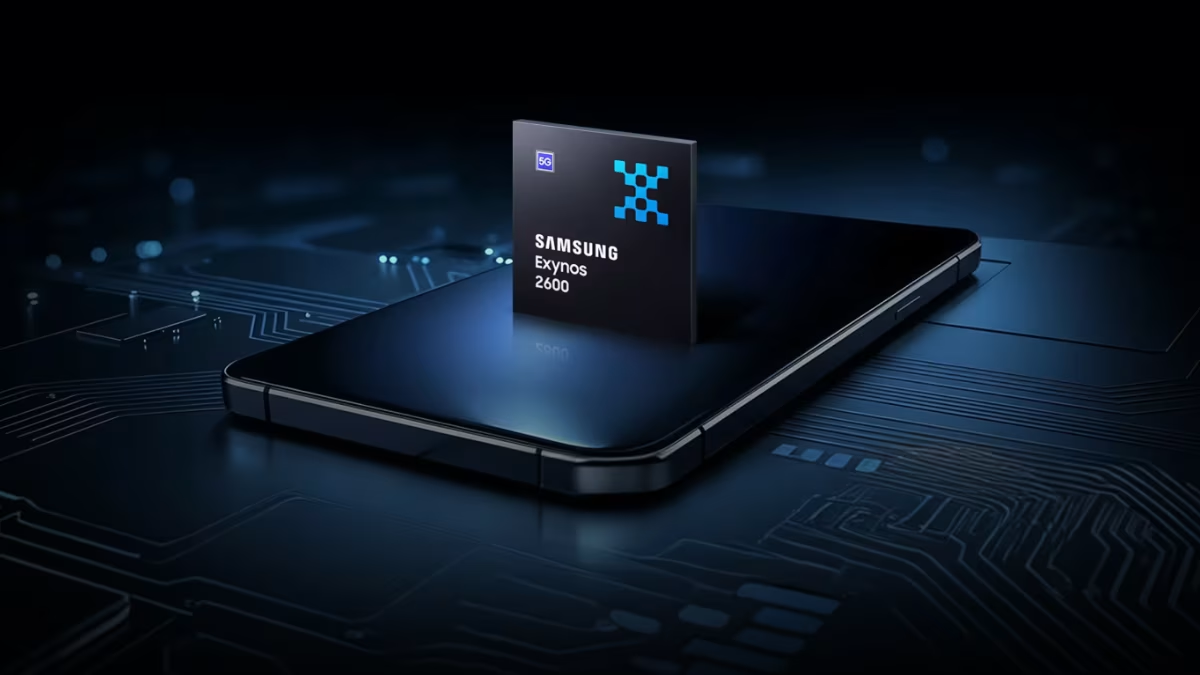
The announcement signals that Samsung’s most advanced process technology has moved beyond laboratories and pilot lines into full-scale commercial production, a critical step in the global chip race.
What Samsung’s Exynos 2600 Announcement Confirms
Samsung’s confirmation focuses on two key points:
- Exynos 2600 is built on a 2nm process
- The chip has entered mass production, not just prototype or limited runs
This distinction is important. While several chipmakers have discussed future 2nm roadmaps, Samsung is the first to publicly confirm manufacturing at scale.
Also Read: Google Releases Emergency Update for Pixel Phones to Address Battery and Touch Problems
Why “2nm Mass Production” Matters
In semiconductor terms, mass production means:
- Stable manufacturing yields
- Commercial-ready chip volumes
- Readiness for integration into real consumer devices
Moving to 2nm enables:
- Higher transistor density
- Improved power efficiency
- Better performance per watt
These gains are critical as modern processors face thermal and power limitations, especially in mobile and high-performance computing segments.
Also Read: Xiaomi Is the First Brand to Unlock Alipay Tap to Pay on Smartbands and Smartwatches
Samsung Foundry’s Role in the 2nm Breakthrough
The Exynos 2600 is a major validation of Samsung Foundry’s advanced process technology. Competing directly with other global foundries, Samsung’s move to 2nm mass production strengthens its position as a leading chip manufacturer, not just a chip designer.
Industry watchers see this as a strategic step that could:
- Attract external foundry clients
- Improve Samsung’s in-house silicon competitiveness
- Accelerate next-generation device development
Also Read: Hackers Are Using Fake Kindle eBooks to Take Over Amazon Accounts
Where Exynos 2600 Could Be Used
Samsung has not officially announced specific devices for Exynos 2600. However, Exynos chips are traditionally used in:
- Flagship Galaxy smartphones
- Advanced mobile platforms
- Potential future AI-focused applications
Any confirmed device integration is expected to be announced separately.
How This Positions Samsung Against Competitors
By confirming mass production at 2nm, Samsung:
- Establishes a first-mover advantage
- Demonstrates manufacturing readiness, not just design ambition
- Raises the bar for competing foundries and chipmakers
The announcement reinforces how aggressively the semiconductor industry is pushing beyond current node limits.
What’s Good / What Needs Improvement
What’s Good
- First confirmed 2nm chipset in mass production
- Strong signal of manufacturing maturity
- Major boost to Samsung Foundry’s credibility
What Needs Improvement
- No detailed performance or efficiency figures yet
- Device roadmap not disclosed
- Real-world impact will depend on final product integration
Who This Development Matters Most To
This announcement is especially significant for:
- Semiconductor industry observers
- Smartphone and hardware manufacturers
- Developers tracking next-generation chip platforms
- Consumers interested in future flagship devices
FAQs
What is Exynos 2600?
It is Samsung’s latest Exynos chipset, built using a 2nm manufacturing process.
Why is 2nm important?
Smaller process nodes allow more transistors, better efficiency, and improved performance.
Has Exynos 2600 entered mass production?
Yes, Samsung has officially confirmed mass production.
Is this the first 2nm chip in production?
Yes, according to Samsung, it is the world’s first 2nm chipset to reach mass production.
Will it be used in Galaxy phones?
Samsung has not confirmed specific devices yet.
Is this a consumer launch?
No, this is a manufacturing and technology announcement.
How does this compare to other chipmakers?
Other companies have announced 2nm plans, but not mass production.
When will devices using Exynos 2600 appear?
That timeline has not been announced.
Final Verdict
Samsung’s confirmation of the Exynos 2600 entering mass production at 2nm is a defining moment for the semiconductor industry. While product details remain limited, the manufacturing milestone alone positions Samsung as an early leader in the next era of chip technology.
Loved this guide? Explore more in Cybersecurity, AI Trends, Buying Guides, and Tech Review — your next tech discovery starts here. Don’t miss any Trending Tech News.