If you’ve ever asked ChatGPT for the current time, sunrise, or “what time is it right now?”, you already know the answer — it can’t tell you. And in 2025, many users still wonder why ChatGPT still can’t tell time, especially when AI models seem smarter than ever.

Published Date:
Modify Date:
Today’s story is trending because both ChatGPT and Claude have acknowledged the same limitation — and the real reason is far more technical (and intentional) than most people realize.
This article breaks down the actual engineering reason, OpenAI’s safety logic, and whether this will change in 2025–2026, using a simple, factual, India-friendly explanation.
Disclosure: Technopedia.org.in is reader-supported. We may earn a small commission when you purchase through our affiliate links (Amazon) at no extra cost to you. Prices are accurate as of November 2025.
The Short Answer — ChatGPT Doesn’t Have Live System Access
Despite being incredibly advanced, ChatGPT is still not connected to your device clock, your OS, or the internet’s real-time time servers.
Why was that limitation designed intentionally
OpenAI restricts ChatGPT from accessing:
- Your device time
- System metadata
- IP-based real-time data
- Location-specific timestamps
This is for privacy reasons, but also because the model is a text predictor, not a timekeeping engine.
Even GPT-5 and Claude 3.5 can only “guess” time based on conversation context — and often get it wrong.
Also Read: OpenAI Debuts ChatGPT Shopping Research Tool (2025): Deep Analysis, Insider Breakdown & The Future of AI-Powered Buying Decisions
The Real Technical Reason ChatGPT Can’t Tell Time
Across all major AI models (ChatGPT, Claude, Gemini), the limitation comes from three technical blocks:
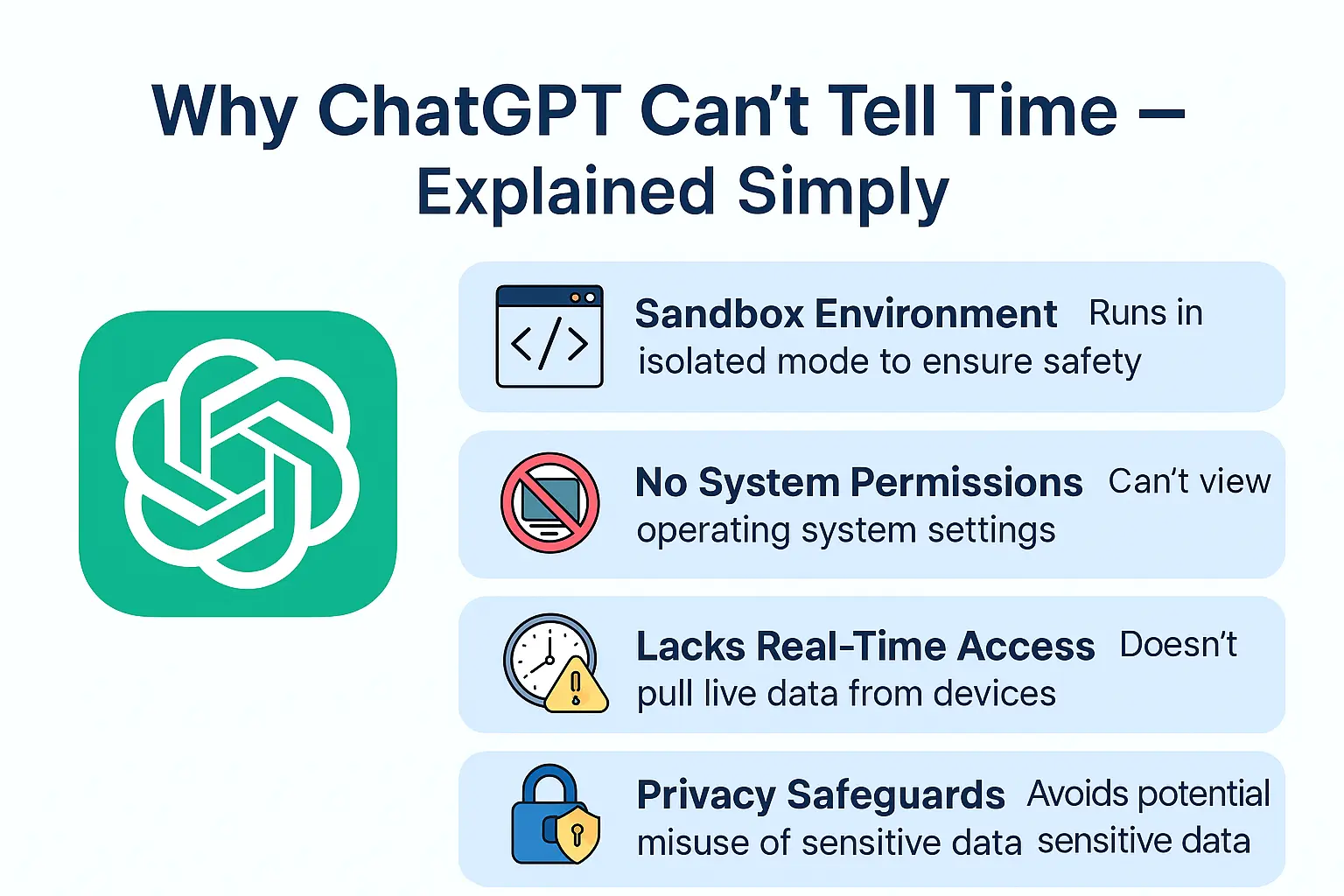
1. No Real-Time System Permissions
ChatGPT runs inside a restricted environment called a sandbox.
It cannot access:
- Computer clock
- Browser time
- System APIs
- Device settings
This prevents misuse or fingerprinting.
2. The Model Has No Internal Clock
Unlike your phone or laptop, LLMs:
- Do not track seconds or minutes
- Do not run internal timers
- Do not have any “timekeeping layer.”
They generate text, not track real-time state.
A large language model cannot “know” when time passes.
3. AI Models Don’t Persist Memory Across Sessions
Every new prompt is a reset.
If you ask:
“Tell me the time after 60 seconds.”
It still cannot measure 60 seconds because LLMs don’t have persistent internal loops.


Why ChatGPT Often Guesses The Time Incorrectly

To avoid leaving you with nothing, ChatGPT attempts:
- pattern guessing based on your previous prompts
- estimating time based on your message timestamp
- reasoning based on typical daily cycles
This is why you get:
“I cannot access the current time, but it is likely morning/afternoon/evening based on context.”
This is not intelligence — it is probabilistic reasoning.
If ChatGPT Can Browse the Internet, Why Can’t It Get Time?
Even with the Browsing Tool, the model is blocked from:
- NTP servers
- GeoIP time APIs
- Device metadata
- Browser timestamps
Tools allow webpage retrieval — not live system interaction.
This is a hard limitation for privacy and safety.
Will ChatGPT Ever Be Able To Tell the Time?
The answer: Yes, but only if OpenAI enables a device-access API.
Here’s the 2025 roadmap (industry insiders + engineering predictions):
Stage 1 — Browsing Time Access
If OpenAI allows time servers via tool-use, ChatGPT may:
- Fetch UTC
- Convert it to your timezone
- Give the accurate current time
Stage 2 — Local Device Time (Optional Future)
This requires user consent:
- “Allow ChatGPT to access your local time?”
OpenAI hasn’t rolled this out because:
- It can reveal your timezone (privacy risk)
- It can fingerprint the user (a security issue)
Stage 3 — AI Agents and Real-Time State
GPT-5.5 or GPT-6 may include:
- Persistent timers
- Stateful agents
- Real-time operating context
But as of 2025, this is not available for safety reasons.
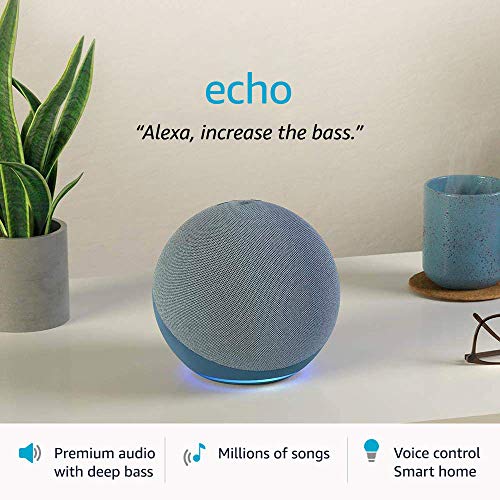
Why Google Assistant, Siri & Alexa Can Tell Time — But ChatGPT Can’t
Voice assistants are connected to OS-level permissions.
Siri / Alexa / Assistant
- Have clock APIs
- Have device-level access
- Are integrated with hardware
- Are permission-based
ChatGPT
- Sandbox isolation
- No device-level access
- No continuous session memory
- No permission system (yet)
This difference explains everything.


Also Read: Build AI Without Coding in 2026 Free: The Complete In-Depth Guide for Tech Users, Developers & AI Enthusiasts
What This Means for AI Users in 2025
This limitation affects:
Developers
- Cannot build time-sensitive apps purely inside ChatGPT
- Need external APIs for clock functions
Students & Professionals
- ChatGPT cannot timestamp notes
- Cannot provide local sunrise/sunset
- Cannot calculate “time remaining” in real time
General Users
- Confused because AI seems so advanced
- Expect ChatGPT to function like a system assistant
- Often misled by the model’s time guesses
But AI cannot break sandbox restrictions — this is by design.
Also Read: OpenAI Mixpanel Data Exposure Explained; The Real Incident, What Was Exposed, and What Users Should Know
FAQ
Q1. Why can’t ChatGPT tell the exact time like Siri?
ChatGPT has no access to your device clock or system APIs.
Q2. Does GPT-5 fix this problem?
Not yet. GPT-5 improves reasoning but still cannot access live system data.
Q3. Can ChatGPT estimate time?
Yes, but it is a contextual guess — not accurate.
Q4. Can ChatGPT measure 30 seconds?
No. It cannot track elapsed time internally.
Q5. Will AI Agents change this?
Possibly — only if OpenAI creates a secure permissions layer.
Q6. Is this a limitation for privacy?
Partly. Access to local time can reveal timezone & location.
Q7. Why do news websites say “ChatGPT hacked”?
Because some third-party tools leaked metadata, not ChatGPT itself.
Q8. Does ChatGPT know the date?
It remembers trained patterns + browsing results, but not the live data unless checked via the browsing tool.
Final Verdict — It’s Not a Bug. It’s a Safety Choice.
Despite AI becoming smarter every month, ChatGPT still can’t tell time because:
- It lacks device permissions
- It has no internal time-tracking system
- OpenAI prioritizes privacy and security
- LLMs are not designed as real-time agents
The moment OpenAI introduces:
- device-level permissions
- persistent agents
- real-time state
ChatGPT will instantly gain this ability.
Until then, ChatGPT will remain “timeless”.
Loved this guide? Explore more in Cybersecurity, AI Trends, Buying Guides, and Tech Review — your next tech discovery starts here. Don’t miss any Trending Tech News.