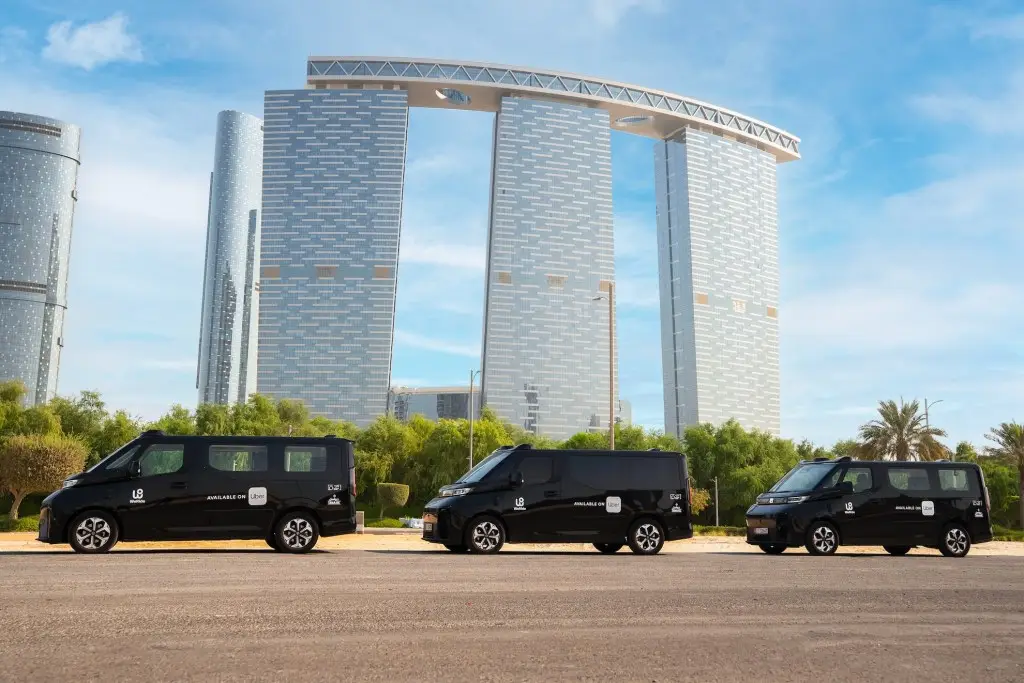
Uber and WeRide have officially launched a fully driverless robotaxi service in Abu Dhabi, marking one of the region’s biggest steps toward commercial autonomous transportation.
This isn’t a pilot test, nor a limited demo.
This is a full commercial deployment — with vehicles operating on public roads, without safety drivers behind the wheel.
Partnering with Abu Dhabi’s Integrated Transport Centre (ITC), Uber is introducing “UberX Autonomous,” powered by WeRide’s Level 4 driverless technology, making the UAE one of the few regions globally to support large-scale robotaxi operations.
This deep dive explains what the launch means, how the tech works, why Abu Dhabi was chosen, and what this milestone means for India and the rest of the world.

Published Date:
Modify Date:
Disclosure: Technopedia.org.in is reader-supported. We may earn a small commission when you purchase through our affiliate links (Amazon) at no extra cost to you. Prices are accurate as of November 2025.
Why This Robotaxi Launch Is a Major Global Milestone
Abu Dhabi has been testing autonomous fleets in limited zones for years, but this is the first time a major global ride-hailing company like Uber is launching:
- Fully driverless
- Commercial
- Public-road operations
- With real paying customers
According to TechCrunch, this partnership makes Abu Dhabi one of the world’s few cities to move beyond experimentation into practical autonomy.
The National (UAE) also notes that this move strengthens the UAE’s ambition to lead the Gulf region in AI-driven mobility.
Uber’s collaboration with WeRide is not random — it’s strategic.
WeRide already operates Level 4 autonomous fleets in China and the US, and now the UAE becomes its Middle East hub.
How the Uber–WeRide Robotaxi System Works
Unlike driver-assist systems (Tesla Autopilot, ADAS, etc.), WeRide operates at Level 4 autonomy — no human intervention required in defined areas.
Here’s the exact tech inside each robotaxi:
1. 360-Degree Perception System
- Multiple LiDAR sensors
- Long-range radar
- High-resolution cameras
- Ultrasonic sensors
This multi-layered perception helps the vehicle “see” in daylight, nighttime, fog, sandstorms, and dense traffic.
2. High-Precision Localization
Vehicle use:
- HD mapping
- GPS
- IMU (Inertial Measurement Units)
- Real-time sensor fusion
Even if GPS weakens, the car can still localize itself.
3. AI-Based Decision-Making
The robotaxi makes decisions for:
- Steering
- Braking
- Acceleration
- Lane merging
- Roundabout navigation
- Pedestrian detection
According to Engadget, WeRide’s system is designed for densely layered road environments like the UAE’s multi-lane highways.
4. Remote Assistance (Only if Needed)
A remote operator can monitor all vehicles but cannot drive them.
They simply assist with instructions if the vehicle requests it.
Why Uber Chose Abu Dhabi for Its First Middle East Driverless Launch
1. Supportive Regulations
The UAE has one of the world’s fastest-moving regulatory frameworks for autonomous mobility. ITC Abu Dhabi and RTA Dubai have both been running large-scale trials.
2. Infrastructure Built for Autonomy
Abu Dhabi’s road network supports:
- Smart sensors
- Clear lane markings
- AI-ready intersections
- 5G connectivity
This dramatically reduces risk.
3. Safety Record & Testing Environment
WeRide has logged over 30 million km of autonomous driving globally (as reported by ADAS & Autonomous Mobility International) — making the UAE comfortable with deployment.
4. Vision 2030 Alignment
The UAE wants:
- 25% of all transport to be autonomous by 2030
- To lead AI adoption in the Gulf
- To reduce transport emissions
Robotaxis fit perfectly into these national goals.
Also Read: Apple’s Foldable iPhone Breakthrough Is Finally Real — And the Crease-Free Display Changes Everything
Service Details: Where and How It Operates
Uber’s robotaxi service covers:
- Yas Island
- Saadiyat Island
- Airport Road
- Zayed International Airport
- Key commercial districts
Over time, Uber plans to expand into additional zones across Abu Dhabi.
Users can simply open the Uber app, choose UberX Autonomous, and book a driverless ride.
Pricing is competitive — similar to UberX Comfort — according to The National UAE.
What’s Good / What Needs Improvement
(Your custom human-style evaluation)
What’s Good
- Fully driverless (Level 4) — no safety driver
- Backed by Uber’s massive user base
- WeRide’s proven autonomous stack
- Strong UAE government support
- Large operating zone from Day 1
- Smooth ride experience based on early reviews
- A clear regulatory framework ensures safety
- Real-time remote assistance available
What Needs Improvement
- Limited operational zone (initially)
- No late-night coverage in some areas
- Robotaxis may avoid high-complexity junctions
- Some users miss human-driver personalization
- Not yet integrated with all Uber loyalty features
Impact on the Middle East: Why This Matters
This launch positions the UAE as a global hub for:
- AI mobility
- Smart city infrastructure
- Autonomous testing and deployment
- Commercial autonomous fleets
It also places them ahead of:
- Europe
- India
- Most Asian markets
- Almost all developing regions
For the Middle East, this is equivalent to leapfrogging an entire generation of mobility technology.
What This Means for India
India is not ready for Level 4 autonomy yet — and Uber knows it.
Why India cannot adopt this immediately:
- Traffic unpredictability
- Lack of high-precision road markings
- Weather variability
- Infrastructure gaps
- Inconsistent regulation
But this Abu Dhabi model could become India’s future once:
- 5G coverage expands
- Smart roads are established
- Autonomous regulations mature
- Urban zones begin pilot projects
By 2030, India may see its first commercial robotaxi zone in:
- Delhi’s Aerocity
- Bangalore’s Electronic City
- Hyderabad’s Gachibowli
- Gift City Gujarat
This Abu Dhabi launch is a template India can study.
Are these robotaxis fully driverless?
Yes — Level 4 autonomy. No safety drivers.
Who built the autonomous technology?
WeRide provides the self-driving system; Uber provides the ride-hailing platform.
Where is this service available?
Yas Island, Saadiyat Island, airport routes, and selected zones.
How much does it cost?
Similar to UberX Comfort (based on local operator data).
Can tourists use it?
Yes — anyone with the Uber app in the UAE can book it.
Will it expand to Dubai?
Yes, expansion is likely but pending regulatory alignment.
8. Are these EVs?
Most WeRide robotaxis are electric or hybrid-electric.
Final Verdict — A Landmark Moment for Autonomous Mobility
Uber & WeRide’s robotaxi launch in Abu Dhabi is a historic step toward the future of autonomous transportation.
It shows that commercial driverless mobility is no longer a futuristic concept — it’s happening today, on real roads, with real passengers.
The UAE is now officially one of the world’s leading regions in autonomous capability.
This launch will reshape how urban mobility evolves across the Middle East — and eventually influence how India prepares for its own autonomous revolution.
Loved this guide? Explore more in Cybersecurity, AI Trends, Buying Guides, and Tech Review — your next tech discovery starts here. Don’t miss any Trending Tech News.